Tulsa Metro Q&A

Tulsa Metro Real Estate Questions, Answered

These are the questions buyers and sellers actually type into Google and ChatGPT before they call. Here is a direct, plain-language answer to each one, plus a link to the full guide when you want to dig deeper. If your question is not here, call me and I will answer it honestly.

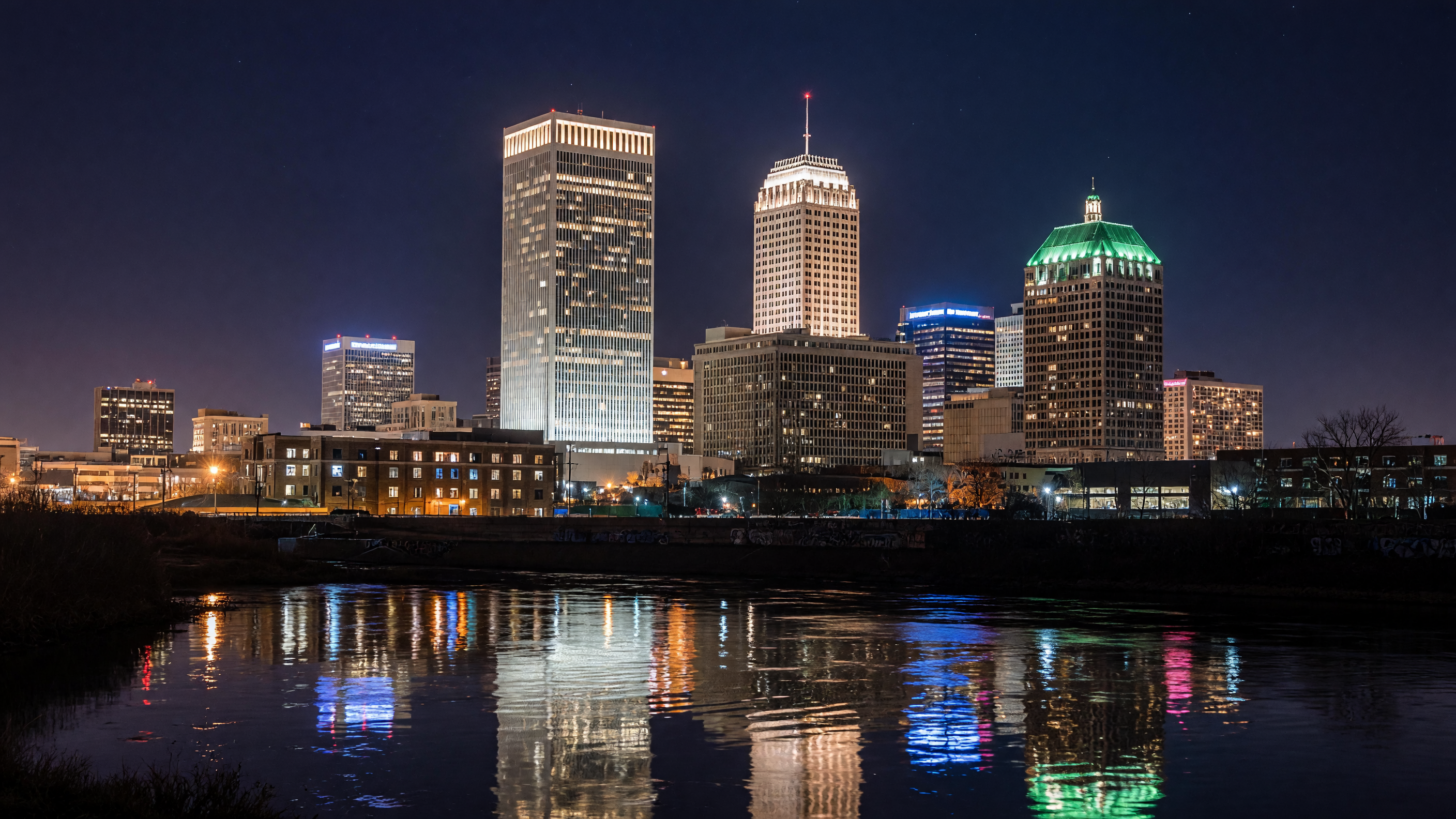
Downtown Tulsa skyline at night, BOK Tower and Art Deco buildings glow above the Arkansas River

Is it a buyer's or seller's market in Tulsa right now?

The Tulsa Metro is close to balanced, leaning slightly toward sellers. Metro inventory sits at about 3 months of supply, down from about 3.5 months a year earlier, and homes close at about 98% of list price on average (HUD and Redfin metro data, 2026). Across the metro, the median home spends about 54 days on market, while Tulsa proper moves faster at about 23 days. Well-priced homes in popular neighborhoods still move fast, while overpriced homes sit longer. Your neighborhood and price range can tip the balance either way, so it helps to look at the numbers for your specific area.

Are home prices dropping in Tulsa?

No. Prices are still rising, just at a slower, steadier pace. As of late 2026, the median sale price in Tulsa proper is around $260,000, up about 4% from a year earlier (Redfin), and the broader metro median is around $290,000, up about 4% (HUD metro data, 2026). Overpriced homes are seeing reductions as sellers adjust to a more balanced market, but the broad trend is modest, sustainable appreciation.

Are homes still selling above asking price in the Tulsa Metro?

Not for most homes. Across the Tulsa Metro, homes close at about 97 to 98 percent of their list price on average, and only about one home in five or six sells above asking. The exceptions are sharp new construction, move-in-ready homes in top school districts, and anything priced smartly from day one. For buyers, that usually means real room to negotiate.

Is now a good time to buy a house in Tulsa?

For buyers planning to stay 3 to 5 years with stable income and savings, Tulsa's affordability and balanced market make it a reasonable time to buy. Waiting rarely saves money, since prices and rents tend to keep climbing while you wait. The right answer depends on your timeline, budget, and goals.

What is the home buying process in Oklahoma?

It follows a clear path: get pre-approved, decide what you want, tour homes, make an offer, then handle inspections and appraisal, finalize your loan, and close. Oklahoma's steps are similar to other states, with one quirk that surprises out-of-state buyers, no attorney is required at closing. A good agent walks you through each stage so you always know what comes next.

Is Tulsa a good place to live?

For most people, yes. The Tulsa Metro's cost of living runs about 12% to 17% below the U.S. average, housing is roughly a third cheaper than the typical American market, and the average commute is around 17 minutes. The job market spans energy, aerospace, healthcare, and tech, and programs like Tulsa Remote keep drawing new residents. Add low property taxes and a slower pace, and it is easy to see why out-of-state buyers keep arriving.

I'm moving to Tulsa from out of state. Where do I start?

Start with two things: get pre-approved with a lender who works with remote buyers, and find an agent who specializes in out-of-state moves. Then narrow your search by school district, commute, and budget, and plan a visit if you can. Oklahoma closings work a little differently than some states, so having a local agent explain the process is worth a lot.

How long does it take to sell a house in Tulsa?

In Tulsa proper, homes are going under contract in about 23 to 24 days on average right now (Redfin), while the wider metro median runs closer to 54 days (LocalAlpha). Well-priced, well-prepared homes in popular neighborhoods can sell in 1 to 2 weeks, while overpriced or dated homes can sit for 60 days or more. The total time to close then depends on your contract period, usually 30 to 45 days after the offer is accepted.

What are mortgage rates in Oklahoma right now?

30-year fixed rates in Oklahoma are averaging roughly 7.2% to 7.8% as of late October 2026, with the national 30-year average around 7.3% (Freddie Mac, NerdWallet, Bankrate, Experian). They vary by lender and borrower profile: your credit score, down payment, and loan type all affect the rate you are offered. A local lender can quote a personalized rate for your situation.

How much do I need to buy a home in Tulsa?

It depends on the home price, the down payment program you use, and your closing costs, but the minimums are lower than most people assume. VA and USDA loans allow 0% down, conventional loans can start around 3%, and FHA requires 3.5%. On a median-priced Tulsa home near $260,000, a 3% down payment is roughly $7,800 and 3.5% is about $9,100. Oklahoma down payment assistance programs, including Tulsa County's, can lower what you need even further.

How much are closing costs in Oklahoma?

Closing costs in Oklahoma typically run 2% to 5% of the purchase price, including lender fees, title, and escrow. On a $250,000 home, that is roughly $5,000 to $12,500. Some of these costs are negotiable, and sellers may agree to cover part of them.

What is my home worth in Tulsa?

The most accurate way to find out is a free, no-obligation valuation based on current Tulsa Metro and NE Oklahoma market data. I pull recent sales, active listings, and neighborhood trends to give you an honest number in plain language. No pressure, no obligation.

Can I use my VA loan more than once?

Yes, VA loan entitlement can be reused. Veterans and service members can use a VA loan more than once, as long as they have remaining entitlement or restore it after selling. It is a powerful benefit for military families moving in and out of the Tulsa area.

Which school district will my home feed into in Tulsa?

Your child's school is decided by your address, not the city on the street sign. The district and school a home feeds into depends on its exact location and the zoning map. I can help you check the feeder pattern for any home you are considering.

Is Tulsa a good place to invest in real estate?

Tulsa has drawn investor interest for its affordability and steady rental demand. Lower entry prices and landlord-friendly laws can support positive cash flow, especially in growing suburbs. As with any investment, the numbers need to work for your specific property and goals.

What should I disclose when selling in Oklahoma?

Oklahoma has specific seller disclosure duties. Sellers are required to complete a property condition disclosure before accepting an offer, revealing known issues with the home. An accurate disclosure protects you as the seller and keeps the transaction on solid ground.

Should I sell my Tulsa home without an agent?

It is possible to sell without an agent, but the pricing, marketing, and negotiation risk is high. Most for-sale-by-owner homes sell for less and take longer than professionally listed homes. The paperwork and legal details also carry real risk if done wrong.

What do I need to know about HOAs when buying in Tulsa?

HOA rules, fees, and reserves vary by community, so it pays to read the documents before you offer. Ask what the dues cover, whether there are special assessments, and how strictly the rules are enforced. Many Tulsa-area communities, especially newer suburbs, have an HOA.

Is this home in a flood zone in Tulsa?

Flood risk varies by property, even within the same neighborhood. You can check the flood maps for a specific address, and flood insurance requirements depend on the zone. I can help you understand what a property's flood designation means for your offer.

Will the housing market crash in Tulsa?

There are no signs of a crash in the Tulsa Metro. Prices are still rising, up about 4.4% year over year, inventory is low at about 2.4 months of supply, and there is no oversupply of homes. A crash needs a big supply and demand imbalance, and Tulsa does not have one. That does not mean every home sells instantly, but the market is on solid footing.

Should I buy a home or keep renting in Tulsa?

It depends on how long you plan to stay. Buying usually wins for people who will stay 3 to 5 years or more, because rent keeps climbing while a fixed mortgage payment stays flat. Tulsa's affordability helps: payments on a median-priced home are often close to rent on a similar property. If your timeline is short or you want maximum flexibility, renting can still make sense.

How much earnest money do I need in Oklahoma?

There is no set amount, but about 1% of the purchase price is typical, with a common range of 0.5% to 3%. In the Tulsa area, that often works out to $1,000 to $3,000 on lower-priced homes and $3,000 to $7,500 on mid-range homes. The deposit is held in escrow, credited toward your purchase at closing, and refundable if you cancel within your contract contingencies.

What are property taxes like in Oklahoma?

Oklahoma property taxes are among the lowest in the country, with an average effective rate around 0.75% of home value, well below the national average of about 1%. Tulsa County runs a little higher, around 1%. Homes are assessed at 11% of their market value and then taxed at the local millage rate, and a homestead exemption can lower your bill.

How much does it cost to sell a house in Tulsa?

Most Tulsa sellers pay a commission of about 5% to 6% of the sale price, plus closing costs like title insurance, escrow fees, a small documentary stamp tax, and prorated property taxes. Combined, sellers typically see total costs of about 6% to 10% of the sale price. Some of these are negotiable, so an agent who itemizes them up front is worth their weight.

How do I choose a real estate agent in Tulsa?

Look for someone who answers your calls, knows the specific neighborhoods you are considering, and explains the process in plain language. Ask how they price homes, how they communicate, and what their recent buyers and sellers say about them. Chemistry matters too, you will be working closely with this person through one of your biggest decisions.

What should I expect from a home inspection in Tulsa?

A licensed inspector will check the roof, foundation, HVAC, plumbing, electrical, and major systems, then give you a report of findings. In Oklahoma, you typically have about 10 days for inspections after the contract is signed. Not every finding is a deal breaker, most homes have a few, the question is which ones matter and who pays to fix them.

Is now a good time to sell my Tulsa home?

For most Tulsa sellers, conditions are still favorable: low inventory means less competition, and well-priced homes are still going under contract in weeks, not months. The market has cooled from its peak, so pricing it right from day one matters more than it used to. If you are ready to move, there is no strong reason to wait.

Can I buy a new home before I sell my current one in Tulsa?

Yes, it can be done, and it does not have to mean carrying two mortgages while you hope. Options like a bridge loan, a home equity line, a contingent offer, or a rent-back give sellers ways to line up the move. The right approach depends on your equity, your timeline, and how hot your current home is likely to be.

Which Tulsa suburb is right for my family?

Each suburb has a different personality. Broken Arrow is the largest and most established, Owasso is one of the fastest growing with highly rated schools, Bixby and Jenks are known for strong school districts and newer construction, and Claremore offers small-town charm at a lower price point. Your budget, commute, and school priorities will point you to the right one.

What is the NAR settlement and does it change how I buy or sell?

The NAR settlement changed how buyer's agent compensation is handled: listing agents can no longer advertise buyer's agent commissions on the MLS, and buyers now sign a written agreement with their agent before touring homes. For Tulsa buyers and sellers, the practical effect is more transparency about who pays what. Your agent should walk you through the paperwork before you sign anything.

What down payment assistance is available for first-time buyers in Tulsa County?

Tulsa County's First Home Program offers a below-market 30-year fixed mortgage with up to 3.5% of the loan amount provided up front for down payment or closing costs. The Oklahoma Housing Finance Agency (OHFA) also runs a statewide program that can provide 3.5% of the loan toward down payment and closing costs. Both have income and price limits, so it is worth checking the current terms with a participating lender.

Should I buy new construction or an existing home in Tulsa?

New construction gives you modern finishes, builder warranties, and the chance to choose upgrades, but it often costs more per square foot and can take months to build. Existing homes are usually move-in ready, sit in established neighborhoods, and are available now. The right choice depends on your timeline, budget, and whether you value customization or immediate move-in.

Do I need title insurance when buying a home in Oklahoma?

Yes, and it is one of the most important protections you will buy. Title insurance protects you if a hidden claim, lien, or ownership dispute surfaces after you close. In Oklahoma the buyer typically pays for the owner's title policy, and it is a one-time cost that covers you for as long as you own the home.

Do I need a storm shelter or safe room in an Oklahoma home?

Oklahoma's tornado season makes a storm shelter or safe room a real consideration for many buyers. Shelters can be installed in a garage floor, under a slab, or as an above-ground safe room, with costs varying widely by type. If severe weather is a concern for your family, it is worth asking whether a home already has one or budgeting to add one.

What should I know about mineral rights when buying in Oklahoma?

In Oklahoma, the surface rights and the mineral rights to a property can be owned separately, and they do not always transfer together. A home can be sold with the minerals retained by the seller or a third party. It is worth asking about mineral rights on any Oklahoma property, because they can affect what you actually own and what happens beneath the surface.

Can I use a USDA zero-down loan to buy in rural Oklahoma?

Yes, USDA loans offer 100% financing, meaning no down payment, for homes in eligible rural and some suburban areas. Parts of the Tulsa metro and much of Northeast Oklahoma qualify, and USDA loans are a strong option for buyers who meet the income limits and are looking outside the core metro.

What happens after my offer is accepted on a Tulsa home?

After your offer is accepted you move into the contract period: earnest money is deposited, you order inspections, finalize financing, and complete any contingencies within the contract timeframes. Then you clear title, do a final walkthrough, and close. It can feel like a lot at once, but a good agent keeps you on track through every step.

How do I make a strong offer on a Tulsa home?

A strong offer starts with a pre-approval letter, a price anchored on recent comparable sales, and terms a seller can rely on: solid financing, a reasonable timeline, and few contingencies beyond inspections and appraisal. In today's more balanced market, a clean, well-priced offer often beats a higher one loaded with risk. Your agent helps you position it so the seller picks yours.

Can I sell an inherited home before probate ends in Oklahoma?

Usually yes, but you can't sign the deed until someone has legal authority to do it. If the home passed through a Transfer-on-Death Deed or joint tenancy with right of survivorship, you may skip probate entirely. Otherwise, how quickly you can sell depends on how the property was titled and the estate's value, so it pays to talk through your exact situation.

What are my options when mortgage rates are at 7%?

Rates near 7% do not mean you should sit out. Buyers can lower their payment with a larger down payment, buy down the rate, or use a temporary buydown. You can also negotiate seller concessions, shop for lower-cost homes, or refinance later if rates fall. The key is running the numbers for your situation rather than waiting for a perfect rate that may never come.

Should I refinance my Tulsa home in 2026?

Refinancing makes sense when it lowers your rate enough to cover the closing costs within the time you plan to stay. With rates still in the mid-7% range, many homeowners who locked in lower rates earlier are better off keeping their current loan. If your rate is higher than today's, a refinance quote is worth getting.

How do I prepare my home for sale in Tulsa?

Start with the things that move the needle: declutter, deep clean, handle minor repairs, and price it right from day one. A pre-listing inspection can surface issues before a buyer's inspector finds them, and good photos and staging help you stand out. Homes that are priced well and show well in Tulsa are going under contract in weeks, not months.

FHA or conventional: which loan is right for a Tulsa home?

FHA loans allow a 3.5% down payment and are easier to qualify for with lower credit scores, but they carry mortgage insurance for the life of the loan. Conventional loans can have a lower overall cost for buyers with good credit and 3% down options, but they are harder to qualify for. Your credit, down payment, and long-term plans decide which fits.

How do I evaluate offers on my Tulsa home?

Price is only part of the picture. Look at the buyer's financing, down payment, contingencies, and proposed timeline, along with their ability to close. A slightly lower offer with strong financing and fewer contingencies can be more attractive than a higher offer that is more likely to fall through. Your agent can help you weigh each offer on the whole package.

What are seller concessions in the Tulsa metro?

Seller concessions are costs the seller agrees to pay on the buyer's behalf, such as covering part of the closing costs, buying down the rate, or making repairs. They can help a buyer afford the purchase and are common in a more balanced market. Concessions are negotiated in the offer and spelled out in the contract.

How much is homeowners insurance in Oklahoma?

Oklahoma homeowners insurance runs higher than the national average because of severe weather and hail risk. Costs vary with your home's value, age, and location, and whether you bundle policies. It is a meaningful part of your monthly budget, so it is worth getting quotes early in the process.

Should I buy a home with well and septic in Northeast Oklahoma?

Homes outside city water and sewer lines often use a private well and septic system. They can be perfectly fine, but you want to confirm the water quality, well flow, and that the septic system passes inspection. Budget for testing and possible repairs, and understand the maintenance that comes with owning them.

What are the most affordable towns in Northeast Oklahoma?

Towns like Coweta, Pryor, and Muskogee offer more home for the money than much of the Tulsa metro, with lower entry prices and a slower pace of life. They are a good fit for buyers who want affordability and space while still being within reach of Tulsa for work and amenities.

Is Oklahoma a good place to retire?

For most retirees, yes, especially if you are cost-conscious. Oklahoma's cost of living runs about 11% to 14% below the national average, Social Security income is not taxed by the state, military retirement pay is tax-free, and residents 65 and older get a $10,000 deduction on other retirement income. Property taxes are among the lowest in the country, and there is no state estate or inheritance tax. Tulsa and Broken Arrow both appear on U.S. News' list of the best places to retire in Oklahoma. The trade-offs to weigh are the hot summers and tornado season.

How long does it take to buy a home in Tulsa from start to finish?

For a well-qualified buyer, the whole process typically runs 45 to 75 days. Finding the home and getting an offer accepted usually takes two to four weeks, then the contract period of about 30 to 45 days covers the inspection, appraisal, and loan processing. Cash purchases can close faster, sometimes in as little as a couple of weeks.

How do I negotiate repairs after a home inspection in Tulsa?

After the inspection, your agent sends the seller the report with a repair request: usually a credit at closing, a price reduction, or a promise to fix specific items. In Oklahoma, you typically get about 10 days for inspections once the contract is signed. Focus on the big-ticket items like the roof, HVAC, electrical, plumbing, and structural issues, and be ready to let smaller items go. The seller can accept, counter, or refuse, and then you decide whether to move forward or walk away.

Does the county matter when buying a home in the Tulsa metro?

Yes, mostly because of property taxes. Tulsa County effective rates run about 0.9% to 1.05% of home value, while Wagoner County runs about 0.74% to 0.83% and Rogers County about 0.71% to 0.82%, so similar homes can carry noticeably different tax bills on opposite sides of a county line. The school district and city move the bill even more than the county. Since towns like Broken Arrow and Owasso span two counties, the exact address matters more than the name on the welcome sign.

How do I downsize in the Tulsa metro?

Start with a plan and a timeline: sort through what you actually use, and donate, sell, or give away the rest before you put the house on the market. Then decide between buying a smaller home, moving to a maintenance-free patio home or condominium, or renting. Tulsa-area suburbs like Broken Arrow, Owasso, Bixby, and Claremore have growing inventories of single-level, lower-maintenance homes. If you have owned for a long time, your equity is usually what makes the math work, so getting a realistic current value early helps you plan with real numbers.

Should I get a fixed-rate or adjustable-rate mortgage?

With 30-year fixed rates around 7.3% nationally right now, a fixed rate locks in a predictable payment for the life of the loan, which suits most Tulsa-area families. An adjustable-rate mortgage starts with a lower rate for an initial period, typically 5, 7, or 10 years, then adjusts with the market. An ARM can make sense if you expect to move or refinance before that fixed period ends. For most long-term homeowners, the certainty of a fixed rate wins.

What is a mortgage rate buydown and is it worth it?

A buydown is an upfront payment, often made by the seller or builder, that lowers your interest rate for a set period. A 2-1 buydown drops the rate 2 percentage points in year one and 1 point in year two; a 3-2-1 buydown steps down 3, 2, and 1 points across three years. Permanent points are paid once to lower the rate for the entire loan. A buydown is worth it when the payment fits your budget and you keep the loan long enough to pass the break-even, often around five to seven years for permanent points.

Still have a question?

No question is too basic and no situation too complicated. Call or text me directly, or book a time that works for you and we will talk through your real estate goals.